In de auto-industrie is gewichtsbesparing een constante obsessie geworden, vooral met de opkomst van elektrische voertuigen waar elke kilogram batterij range beïnvloedt. Geanodiseerd aluminium speelt een cruciale rol in deze lightweighting revolutie, van structurele chassis componenten tot performance engine parts en esthetische tuning accenten. Het anodiseer proces transformeert relatief zacht aluminium in een hard, corrosiebestendig materiaal dat de extreme omstandigheden van automotive gebruik aankan – hitte van motoren, weg chemicaliën, UV exposure, en mechanische impact. Van OEM productie tot aftermarket tuning, anodiseren is onmisbaar geworden voor moderne voertuig engineering.
Inhoudsopgave
Waarom Anodiseren Essentieel is voor Automotive
De automotive sector heeft specifieke en extreme eisen die anodiseren tot een ideale oplossing maken. Voertuigen opereren in een breed temperatuurbereik (-30°C tot +150°C+ in engine bay), worden blootgesteld aan agressieve chemicaliën (road salt, brake fluid, coolant), ervaren constante vibratie en mechanische stress, en moeten 10-20 jaar functioneel blijven bij daily driving.
Gewichtsbesparing is de primaire driver voor aluminium adoptie. Tesla Model S gebruikt aluminium chassis dat 40% lichter is dan staal equivalent, wat direct vertaalt naar 15-20% meer elektrische range. Voor ICE voertuigen betekent gewichtsreductie betere fuel economy (elke 100kg besparing = ~0.3-0.5L/100km verbetering) en verbeterde handling door lagere unsprung mass. Anodiseren voegt slechts 0.01-0.05mm toe aan dimensies – verwaarloosbaar versus dikke verf lagen.
Thermische management profiteert van aluminium’s hoge thermal conductivity (205 W/m·K, 4x beter dan staal). Intake manifolds, intercoolers, radiators – allemaal profijt van efficiente heat transfer. Hard-anodiseren beschermt deze componenten zonder thermal performance te compromitteren – de oxidelaag is dun genoeg (30-100 micron) om heat flow niet significant te blokkeren.
Chemical resistance in engine bay is kritiek. Brake fluid (glycol-based), coolant (ethylene glycol), engine oil, fuel splashes, battery acid leaks – allemaal kunnen bare aluminium corroderen. Geanodiseerde oppervlakken blijven inert, beschermen componenten voor vehicle lifetime. Dit is waarom OEM’s zoals Audi, BMW, en Mercedes hard-anodizing specificeren voor critical engine components.
Motorcomponenten en Performance Parts
De motor omgeving is een van de meest veeleisende voor materialen – hoge temperaturen, vibratie, chemische exposure, en mechanische stress komen allemaal samen. Geanodiseerd aluminium excelleert hier mits correct toegepast.
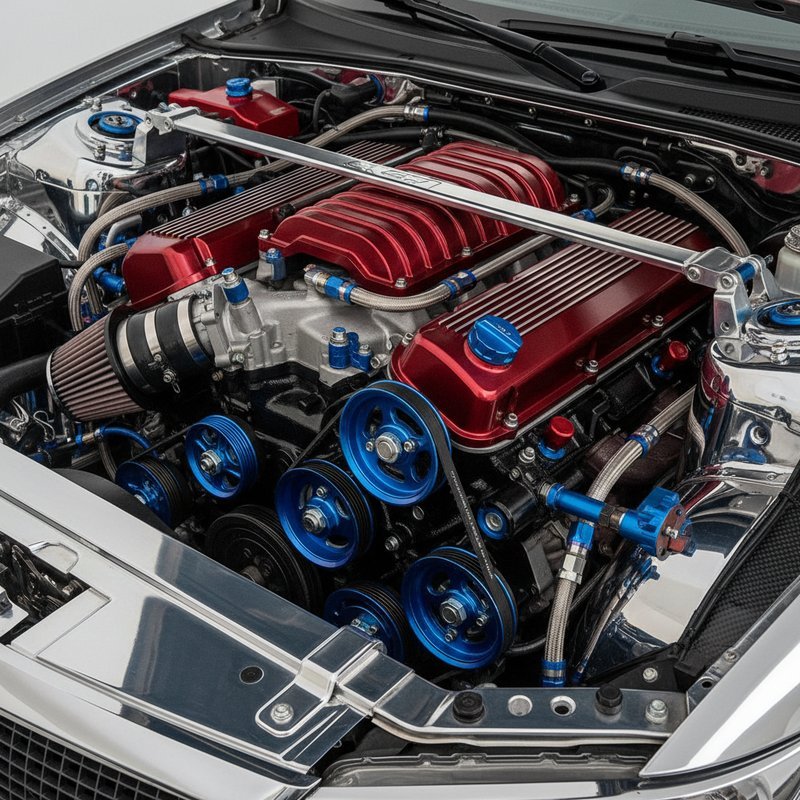
Intake manifolds zijn vaak gegoten aluminium (A356, A380 alloys) die geanodiseerd worden voor corrosiebestendigheid en smooth airflow. De anodische laag heeft een glad, low-friction oppervlak dat turbulentie reduceert. Premium performance manifolds van merken zoals Skunk2, AEM, en Injen gebruiken Type II anodizing (15-25 micron) in verschillende kleuren (rood, blauw, zwart) voor aesthetic differentiation en brand recognition. Kosten: €400-1200 voor aftermarket manifold.
Throttle bodies vereisen precise boring tolerances (±0.01mm) voor butterfly valve clearance. Anodiseren adds ~15-25 micron uniform, wat compensated wordt tijdens machining. Hard-anodizing voorkomt throttle plate wear die zou leiden tot air leaks en poor idle. OEM throttle bodies zijn vrijwel altijd clear anodized; aftermarket vaak gekleurd voor visual impact.
Engine pulleys (crank, alternator, water pump) worden gemaakt van 6061-T6 aluminium en hard-anodized voor wear resistance. De pulley grooves moeten dimensionally stable blijven – belt slip door wear zou accessory drive compromitteren. Lightweight performance pulleys (60-70% lichter dan steel) van merken zoals Unorthodox Racing gebruiken Type III anodizing. Gewichtsbesparing reduces rotating inertia, improving throttle response. Kosten: €80-250 per pulley.
Turbo components: Compressor housings, intercooler end tanks, blow-off valves – allemaal gebruiken geanodiseerd aluminium in high-performance turbo systemen. De glassy-smooth anodized surface in compressor housing reduces air turbulence and heat buildup. Brands zoals Garrett, BorgWarner, en Turbosmart specificeren hard-anodizing voor longevity in boost pressures tot 40+ PSI.
Velgen en Wielen
Aluminium velgen domineren de automotive markt – zelfs budget cars hebben tegenwoordig alloy wheels. Anodiseren speelt een specifieke maar belangrijke rol, vooral in premium en aftermarket segmenten.
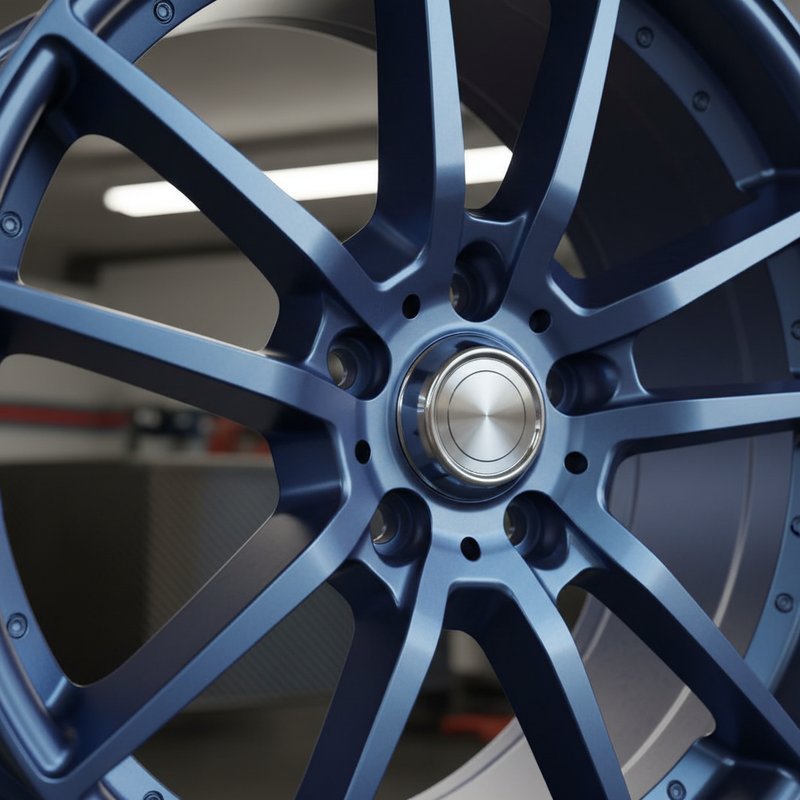
Factory wheels zijn zelden full-anodized – de meeste gebruiken multi-stage finishing: machined face (polished aluminium), clear coated spokes/barrel, en painted surfaces. Echter, sommige luxury brands (Porsche, McLaren, Bugatti) bieden optional anodized wheels als premium upgrade. Deze gebruiken architectural-grade Type II anodizing (20-25 micron) voor corrosion resistance tegen road salt en brake dust chemicals. Kosten: €500-2000 per wheel premium voor factory anodized option.
Aftermarket forged wheels van topmerken (HRE, BBS, Forgeline, Vossen) bieden vaak anodized finishes. Het proces: CNC machining van forged 6061-T6 billet, polishing tot mirror finish, dan clear anodizing om het polished look te behouden met corrosion protection. De anodized layer (10-15 micron, thinner dan normal architectural) behoudt de visual clarity van polished aluminium terwijl oxidation wordt geprevented. Set van 4: €5,000-15,000+.
Wheel hardware: Lug nuts, center caps, valve stems – de kleine details die enthusiasts color-coordinate. Geanodiseerd aluminium lug nuts in rood, blauw, goud, zwart zijn populair in tuning scene. Brands zoals Muteki, Rays Engineering (Volk Racing), en Project Kics maken titanium-aluminum hybrid lug nuts met hard-anodizing. Let op: sommige “anodized” lug nuts zijn actually painted – vraag naar specificaties. Echte anodizing gaat niet fade; paint wel. Kosten: €50-150 for set of 20.
Brake caliper refinishing: Sommige enthusiasts hebben OEM calipers stripped en re-anodized instead of painting. Dit is technisch mogelijk maar complex – calipers moeten completely disassembled, seals removed, old coating stripped, machined surfaces masked, dan anodized en re-assembled. Cost: €400-800 per caliper professionally done. Alternatief is colored anodized aluminum caliper covers (cosmetic only) voor €100-300.
Chassis en Ophanging
Modern performance vehicles gebruiken extensive aluminium in chassis en suspension voor weight reduction zonder strength compromise. Anodisering beschermt deze critical structural componenten.
Subframes: Audi’s Aluminum Space Frame (ASF), gebruikt in R8 en recent A8, is largely geanodiseerd aluminium extrusions en castings. De space frame architecture gebruikt thin-walled hydroformed tubes (2-3mm wall thickness) die strength-to-weight optimization leveren. Anodisering adds corrosion protection zonder weight penalty van paint. Factory subframes gebruiken clear Type II anodizing (12-18 micron) volgens automotive industry specs (vaak proprietary but based on ISO 7599).
Control arms en wishbones: Suspension componenten ervaren cyclic loading en vibration die fatigue kunnen veroorzaken. Forged aluminium control arms (vaak 7075-T6 voor max strength) worden soms geanodiseerd, though met voorzichtigheid – de anodische layer is brittle en kan micro-crack under extreme stress concentration. Conservative engineers vermijden anodizing op high-stress areas en gebruiken protective clear coat instead. Aftermarket performance control arms (companies like SPL Parts, Megan Racing) bieden anodized options – meestal Type II in kleuren voor visual differentiation. Set: €600-2000.
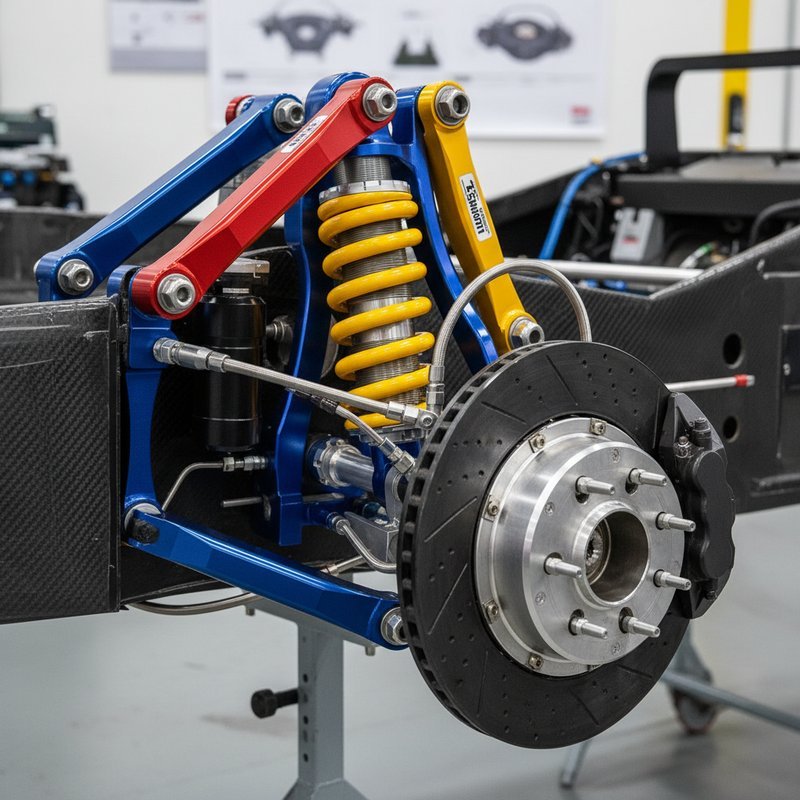
Shock absorber bodies: High-end coilover systems (Ohlins, KW Suspension, Bilstein clubsport) gebruiken hard-anodized aluminium shock bodies. De smooth, hard surface allows precise piston movement met minimal friction en wear. Yellow-gold anodizing van Ohlins is iconisch – dit is electrolytically colored Type II dat brand identity levert plus functional corrosion resistance. Cost voor complete coilover set: €1500-4000.
Sway bar end links en mounting hardware zijn often geanodiseerd in aftermarket setups. De constant movement en exposure to road debris/chemicals maakt corrosion protection essential. Spherical bearing housings in adjustable end links gebruiken hard-anodizing om bearing surface wear te minimize. Meer over automotive toepassingen.
Tuning en Aftermarket
De automotive tuning en aftermarket scene heeft geanodiseerd aluminium omarmd niet alleen voor functionaliteit maar als visual statement. Colored anodizing is identity marker voor performance-oriented builds.
Engine bay bling: De term “engine bay jewelry” refereert naar decorative anodized components – oil caps, coolant caps, dipstick handles, fuse box covers, battery terminals. Brands zoals Mishimoto, GReddy, en AEM Intake Systems maken full engine dress-up kits in matching anodized colors (typisch rood, blauw, purple). Dit is pure esthetiek maar reflecteert owner pride en attention to detail. Cost: €20-80 per piece, €200-500 voor complete kit.
Shift knobs: Aluminium shift knobs, often CNC machined from billet 6061 en anodized, zijn populair in manual transmission cars. De smooth, cool-touch feel van geanodiseerd aluminium plus custom colors/engraving maken elk car personalized. Brands zoals Skunk2, Mishimoto, Raceseng leveren hundreds of designs. Weighted knobs (200-500g) improve shift feel door increased momentum. Cost: €50-200.
Pedal sets: Racing-style pedal covers in geanodiseerd aluminium met rubber grip inserts zijn common modification. Sparco, NRG, Heeltoe Autos maken bolt-on sets. De hard-anodized surface resists shoe wear better dan plastic OEM pedals. Anodizing ook creates non-slip texture through micro-surface roughness. Cost: €80-200 voor gas/brake/clutch set.
Interior trim: Dashboard trim pieces, door handles, center console accents – upscale aftermarket companies zoals Rennline (Porsche specialist) en Turner Motorsport (BMW) offer anodized aluminium interior upgrades. Dit replaces plastic or fake carbon parts met metal aesthetic. Requires careful color matching to exterior theme. Cost: €150-600 afhankelijk van coverage.
Quick release steering wheel adapters: Racing-inspired quick-disconnect hubs (NRG, Works Bell, Takata) gebruiken hard-anodized aluminium voor strength en corrosion resistance. De locking mechanism must remain precise – anodizing prevents wear dat zou leiden tot dangerous steering wheel detachment. These are vaak anodized in matching color schemes (blue, red, titanium). Cost: €150-400.
Onderhoud in Automotive Omgeving
Automotive omgeving is brutal – road salt in winter, brake dust (highly alkaline en abrasive), bug splatter (acidic), tar, tree sap, bird droppings. Geanodiseerde componenten vereisen specific care om appearance en protection te behouden.
Regular washing: pH-neutrale car shampoo is essential – alkaline degreasers of acidic wheel cleaners kunnen anodized layer gradual etchen. Brands zoals Meguiar’s Gold Class, Chemical Guys, Gtechniq maken auto-safe washes. Wash frequency: weekly bij daily driving, bi-weekly voor garage queens. Focus on removing brake dust quickly – als dit baked-on wordt in hot weather, removal is moeilijker en kan surface damage veroorzaken.
Wheel cleaning: Geanodiseerde velgen of anodized wheel hardware needs gentle approach. Spray met wheel cleaner specifically labeled “safe for anodized aluminium” (zoals Sonax Wheel Cleaner Plus of P21S Gel), laat 2-3 minuten werken, agitate met soft brush, rinse thoroughly. Avoid harsh acid-based cleaners (hydrofluoric acid) die gebruikt worden voor bare aluminium – deze attacken anodizing.
Sealing/waxing: Anodized surfaces benefit van additional sealant layer. Automotive ceramic coatings (zoals Gtechniq Crystal Serum, CarPro Cquartz) bond well to anodized aluminium en provide extra UV/chemical resistance plus easy cleaning. Application cost: €500-1500 professional, €100-300 DIY kits. Alternative: traditional carnauba wax works maar vereist meer frequent re-application (every 2-3 months vs 1-2 years voor ceramic).
Winter protection: In salt-belt regions, extra care is essential. Weekly washing to remove road salt, post-wash rinse with deionized water (prevents water spot etching), en application of paint sealant to anodized surfaces creates barrier. Sommige enthusiasts gebruiken rust preventive sprays (zoals Fluid Film) op suspension components – test eerst op small hidden area om te verify compatibility met anodizing. Lees meer over onderhoud en levensduur.
Veelgestelde Vragen
Vervaagt de kleur van geanodiseerde performance parts in de motor?
De kleurstabiliteit van geanodiseerde automotive componenten hangt sterk af van heat exposure en anodizing type. Engine bay temperaturen variëren drastically – areas near exhaust manifold of turbo kunnen 200-300°C+ bereiken, terwijl intake side of periphery components blijven onder 100°C. Voor low-heat areas (intake manifolds, pulley covers, dipstick handles), standard Type II electrolytically colored anodizing (rood, blauw, purple) is stabiel en toont minimal fading na jaren gebruik.
High-heat applications zijn problematischer. Organic dye-based colors (sommige reds, blues) kunnen faden bij sustained exposure boven 150°C. Premium performance parts manufacturers gebruiken heat-stable inorganic coloring methods: tin-based bronze, nickel-based black/grey, of integral color from hard-anodizing process zelf (natural charcoal grey/black). Brands zoals Skunk2 en AEM specificeren heat-resistant anodizing voor hun high-temp rated components.
Voor maximum color retention in engine bay: 1) Kies parts rated voor intended location (check manufacturer specs voor max operating temp). 2) Consider natural anodized finishes (clear, bronze, black) die inherently heat-stable zijn. 3) Vermijd bright colors (yellow, orange, purple) voor turbo-proximate components. 4) Allow proper heat shielding – heat wrap on exhaust, thermal barriers reduce ambient temps. Real-world experience: quality anodized intake manifolds tonen minimal color shift na 5-10 jaar, maar poorly-done cheap colored parts kunnen fade binnen 1-2 jaar bij aggressive driving.
Zijn geanodiseerde velgen beter dan poedercoated of geverfd?
De vergelijking tussen anodized, poedercoated, en painted wheels is complex en afhankelijk van priorities. Anodized wheels bieden superior corrosion resistance – de oxidelaag is integraal deel van metaal en kan niet delaminate zoals coating. Voor salt-belt gebruik is dit significant voordeel. Aesthetic: anodizing behoudt metallic aluminium look met transparante finish – appealing voor minimal, industrial aesthetic maar kan show imperfections (scratches, rock chips more visible). Cost: expensive (€500-2000 premium per wheel professional anodizing).
Powder coating biedt breedste color palette – any RAL/custom color possible, thick coating (60-120 micron vs 15-25 voor anodizing) provides beter rock chip resistance, en cost is moderate (€100-250 per wheel). Echter, powder coat kan chip at impact points (curb rash) exposing bare aluminium dat oxideert, en moet recoated every 5-8 jaar bij intensive use. Durability is good maar niet lifetime zoals anodizing.
Paint (wet spray) is most economical (€50-150 per wheel professional) maar least durable – chips easily, requires re-painting every 3-5 years especially voor daily-driven wheels. OEM wheels gebruiken often multi-layer paint systems met clearcoat die beter presteren dan single-stage aftermarket paint, maar nog steeds inferior to anodizing/powder durability.
Praktische aanbeveling: Voor show cars/garage queens waar appearance is alles, powder coating in custom colors wins. Voor daily drivers in harsh climates (road salt, aggressive driving), anodized or powder with proper prep/primers. Voor budget builds, quality DIY powder coating (cure in home oven) is feasible en delivers decent results voor €200-400 in equipment plus €20-40 per wheel in powder. Anodizing vereist professional facilities – not DIY friendly for wheels.
Kan ik zelf automotive parts anodiseren thuis?
DIY anodiseren is technisch mogelijk voor kleine automotive accent parts maar vereist significant investment, workspace, en chemische veiligheid awareness. Basic setup costs: €300-800 voor rectifier (DC power supply, 0-30V, 10-20A), battery charger werkt voor very small parts, acid-resistant tanks (plastic storage containers), cathode materiaal (lood strips), sulfuric acid elektrolyt, en distilled water. Plus safety: goggles, acid-resistant gloves, fume ventilation (kritiek – sulfuric acid fumes zijn corrosive én toxic).
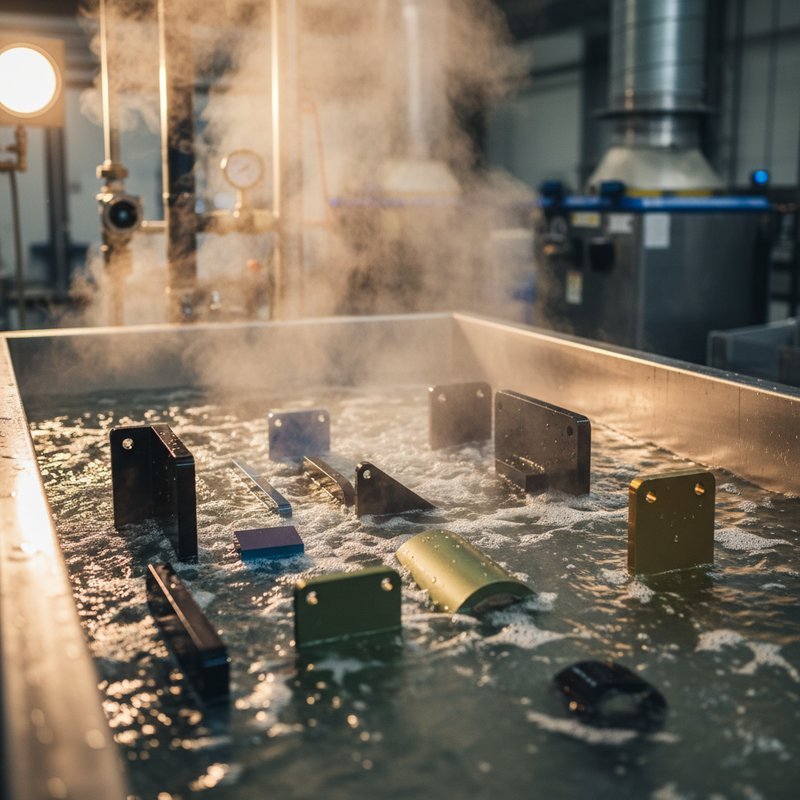
Process challenges: Temperatuur control is difficult zonder chiller (most DIYers use ice baths, tedious voor consistent results). Pre-treatment vereist caustic etching (sodium hydroxide), desmutting (nitric acid), en thorough rinsing – elk step must be perfect voor quality results. Kleuren vereist either organic dyes (RIT fabric dye works maar fade-prone) of electrolytic coloring (extra complexity). Sealing vereist boiling deionized water for 20-30 min – weer energy/equipment.
Realistic DIY scope: Kleine parts zoals shift knobs, dipstick handles, oil caps – feasible met patience. Results will be “good” niet “professional” – expect some unevenness, color variations. Larger parts (intake manifolds, pulleys) are challenging door tank size requirements en ensuring uniform current distribution. Wheels zijn practically impossible DIY – te groot, need specialized masking voor mounting surfaces.
Cost analysis: DIY setup €300-800 plus learning curve (expect failures initially). Professional anodizing voor small parts: €20-80 per piece. Break-even point is ~10-20 parts. Verdict: Voor enthusiasts doing multiple builds or selling custom parts, DIY kan worthwhile zijn. Voor one-off personalization, professional service is meer cost-effective en results are guaranteed. Safety caveat: Sulfuric acid handling requires respect – chemical burns are serious. Ensure proper training/research before attempting.
Hoe zwaar worden performance parts door anodiseren?
Weight gain van anodiseren is minimal en practically negligible voor automotive applications. De anodische laag groeit approximately 50% inward (consuming aluminium) en 50% outward, resulting in net dimensional increase van ~half the coating thickness. Voor typical Type II anodizing (15-25 micron coating), volumetric growth is ~7-12 micron outward. Aluminiumoxide heeft density van ~3.95 g/cm³ versus bare aluminium 2.70 g/cm³ – dus per unit volume, slight weight gain occurs.
Praktische berekening: Een intake manifold met surface area ~0.5 m² en 20 micron anodizing adds approximately 40 grams total weight (0.04 kg). Voor comparison, de manifold zelf weegt 3-5 kg, so anodizing adds <1% weight increase. Een shift knob (surface area ~0.01 m²) gains <1 gram van anodizing - completely unmeasurable in practice. Velgen (surface area ~0.8-1.2 m² per wheel) gain ~60-100 grams van anodizing - again negligible versus 8-12 kg wheel weight.
Hard anodizing (Type III) met dikker coatings (50-100 micron) adds proporionally meer weight maar still minimal: ~100-200 grams voor large manifold, ~20-40 grams voor pulley, ~150-250 grams per wheel. Voor perspective: switching from steel lug nuts to aluminium anodized saves ~800-1000 grams (20 nuts) – far outweighing any anodizing weight penalty.
Racing implicaties: For serious motorsport waar every gram counts (Formula, Time Attack), engineers do account voor coating weight. Echter, even in deze extreme cases, anodizing’s corrosion/wear protection benefits outweigh minimal weight penalty. Alternative (paint/powder coat) adds similar or more weight with less durability. Verdict: Voor 99.9% van toepassingen including enthusiast track cars, anodizing weight gain is irrelevant en shouldn’t factor into decision making. Focus should be op durability/aesthetic benefits.
Moet ik speciale producten gebruiken voor geanodiseerde engine parts?
Geanodiseerde engine parts zijn generally compatible met standard automotive fluids/chemicals maar voorzichtigheid met extreme pH products is advised. Engine oils, coolants, brake fluids: Normale automotive fluids (olie, koelvloeistof, rempompfloeistof) hebben neutral-to-mild pH en zullen geanodiseerde surfaces niet aantasten bij normal contact. Engine oils (SAE 0W-20 through 20W-50) bevatten detergents/additives die compatibel zijn. Coolants (ethylene/propylene glycol based) zijn OK. Brake fluids (DOT 3/4/5.1 glycol-based) zijn safe.
Cleaning products vereisen selectivity: Vermijd strong alkaline degreasers (pH >11) zoals some industrial engine cleaners – deze kunnen gradual etchen van anodizing bij prolonged exposure. Safe alternatieven: Simple Green (diluted 1:10), purple power (1:4), or dedicated engine bay cleaner wie Meguiar’s Super Degreaser, Chemical Guys Signature Series Orange. Voor anodized intake manifolds/pulleys during install, wipe met isopropyl alcohol (70-99%) – totally safe en excellente reiniger.
Polishing/restoring: Geanodiseerde surfaces kunnen dull worden over time door oxidation (paradoxically, de anodic layer zelf kan very slowly oxidize in extreme conditions). Automotive metal polish (zoals Mothers, Meguiar’s) gebruikt op anodized surfaces can restore gloss – work met soft microfiber en light pressure. This essentially polishes the outer nanometers van oxide layer. For heavily oxidized anodized parts, try aluminum brightening compound maar test on hidden area eerst – some aggressive compounds kan etchen.
Anti-seize op threads: When installing anodized parts (manifold bolts, pulley bolts), engineers debate anti-seize use. Pro: Prevents galling/seizing, allows accurate torque readings. Con: Can reduce friction coefficient changing torque-to-preload relationship (risk of over-tightening). Best practice voor anodized parts: Use copper or nickel anti-seize (niet aluminum based – redundant), apply sparingly to male threads only, reduce torque by ~10% van spec or use factory spec acknowledging reduced friction. For critical fasteners, follow OEM recommendations precisely.
Welke automotive brands gebruiken anodiseren standaard?
Verschillende automotive manufacturers gebruiken geanodiseerd aluminium prominent, vaak as differentiator voor premium/performance models. Porsche is wellicht most committed – their engineering philosophy emphasizes lightweight precision. Turbo/GT models gebruiken anodized intake plenums, intercooler end tanks, en suspension components. Factory option wheels op 911 GT3/RS en Taycan kunnen zijn anodized. Porsche’s heritage racing program heeft anodizing adopted voor reliability – Le Mans winning 919 Hybrid had extensive anodized components.
McLaren automotive (niet de F1 team, maar supercar division) gebruiken anodized aluminium extensively in their carbon fiber monocel chassis’ mounting points, suspension components, en engine bay parts. Their “Proactive Chassis Control” hydraulic suspension system uses hard-anodized aluminium actuator bodies. McLaren marketing materials often highlight “aerospace-grade anodizing” as quality indicator.
BMW M Division gebruikt anodized componenten in performance applications – M3/M4 S58 engine heeft anodized intake runners, M5 heeft suspension links met protective anodizing. Echter, BMW generally favors powder coating voor visual parts (wheels, trim) due to color flexibility. Hun aluminum space frame in i3 electric car had corrosion protection via anodizing + additional sealants.
Audi Sport/RS models: The RS lineup (RS3, RS4, RS5, RS6, RS7) features anodized details – intercooler pipes, engine covers. Audi’s commitment to aluminum (Aluminum Space Frame) means corrosion protection is critical – combination van anodizing and cathodic electrodeposition (e-coat) is used depending op component function.
Aftermarket influence: Ironically, aftermarket manufacturers (APR, Integrated Engineering, 034 Motorsport, etc.) often more prominently feature anodizing than OEMs. This is both functional (corrosion protection) en marketing (colored anodizing creates brand identity). Japanese tuning houses (HKS, Blitz, Trust/GReddy) pioneered colored anodized engine parts in 1990s – this aesthetic became defining characteristic van modified sport compacts.
Geanodiseerd aluminium in de auto-industrie vertegenwoordigt de convergentie van weight saving engineering, durability requirements, en automotive enthusiasm culture. Van OEM performance models tot aftermarket tuning, anodisering levert de functional benefits en visual impact die moderne automotive applications vereisen.